
Most climate and disaster risks faced by governments in Southeast Asia remain outside insurance and reinsurance markets. This is not for lack of solutions. The insurance capacity and expertise needed to manage this risk already exist in Singapore, London and global markets. The real challenge is creating stronger pathways so that public risks can reach them.
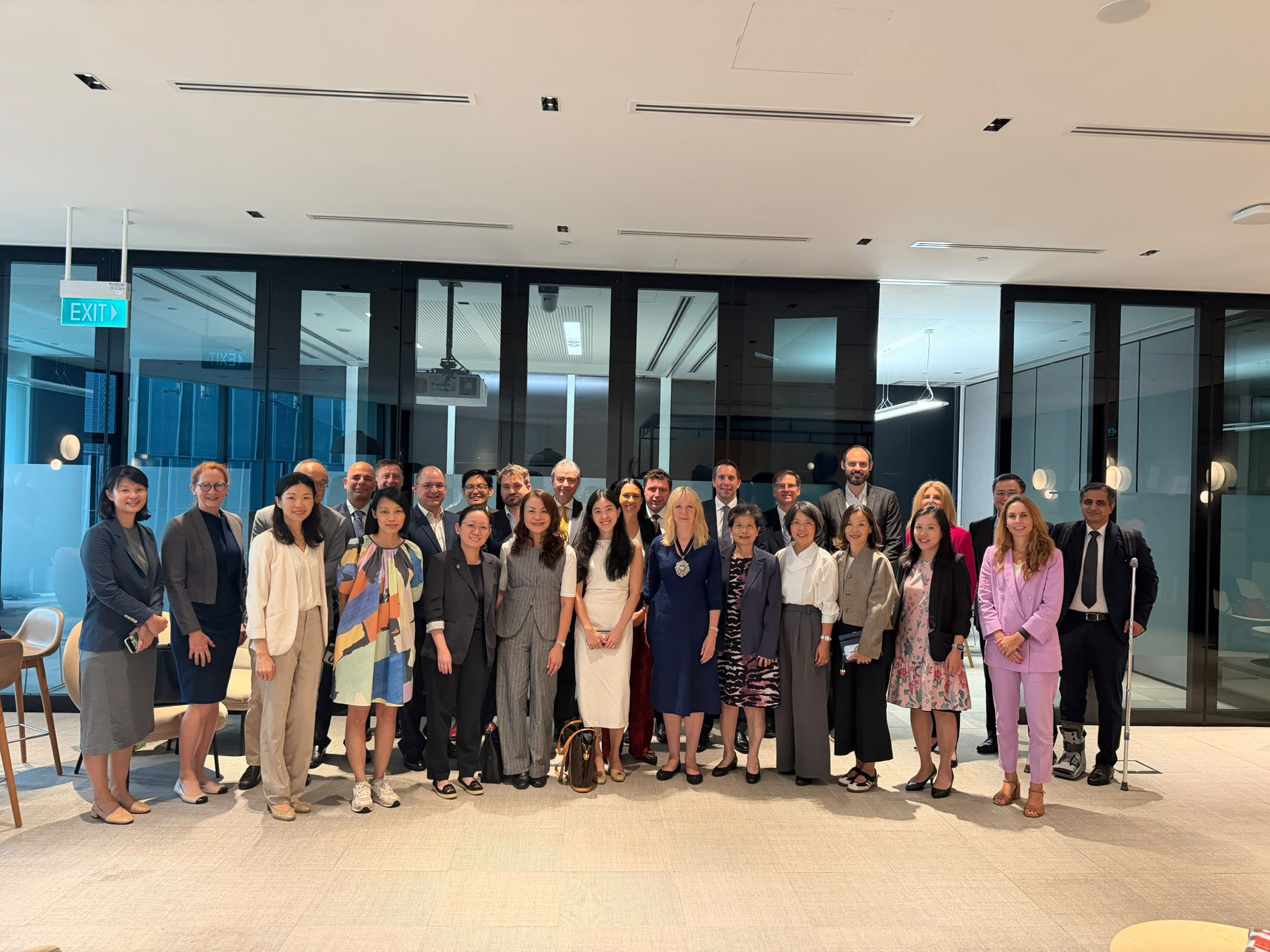
This challenge was the key question at a high-level roundtable co-chaired by the Lady Mayor of the City of London, Dame Susan Langley DBE, and SEADRIF’s Chief Executive Benedikt Signer.
Representatives from the World Bank, Asian Development Bank, Monetary Authority of Singapore, UK Government and City of London Corporation joined insurers, reinsurers, brokers and resilience specialists from Singapore and London.
The discussion surfaced four key areas for action:
Give public risks a clearer route to insurance markets
There is a disconnect between the institutions that finance public infrastructure and those that insure risk. Governments, development banks and insurers often engage at different stages, work to different timelines and approach risk through different lenses, leaving lending and insurance in separate conversations, with risk management for the operational life of assets sitting outside the financing process until late in the project cycle.
The challenge extends to how risk is presented. Governments may already have climate, hazard and infrastructure data, but often need support turning that information into investment plans and insurance propositions. For insurers, the same risk needs to be structured and communicated in a form the market can assess and price.
This reflects demand for trusted intermediaries that can bridge institutional divides, translate between public policy and insurance perspectives, and help structure public risks for the market.
Embedding risk engineering and insurance into project finance
The roundtable highlighted the need for a strong focus on reducing risk in the first place. The insurance industry has a wealth of experience, but it is critical to bring insurers and risk engineers into infrastructure projects earlier. They should be part of the conversation while projects are being planned and financed, rather than after construction has finished.
Earlier involvement allows insurers to bring risk modelling and engineering expertise into project design, identify vulnerabilities, and reduce or mitigate risks wherever possible. With a more resilient asset and a lower level of residual risk, insurance can then provide the final layer of financial protection for the risks that remain and reduce the cost of coverage.
Currently, public infrastructure is usually insured during construction as part of procurement requirements for contractors but then left uninsured once it enters operation. Rather than treating insurance as a standalone purchase at the end of the process, resilience and financial protection should be embedded from the beginning.
The SEADRIF Sovereign Assets and Fiscal Empowerment (SEADRIF-SAFE) facility illustrates how this could work in practice. The regional mechanism under development aims to integrate risk engineering and multi-year disaster insurance into project financing from the outset, helping to strengthen resilience and extend protection from construction through the asset’s operational life.
Unlock new market opportunities
Affordability and public budgeting are another key bottleneck. Having to allocate limited resources between many immediate spending priorities, governments face political and fiscal constraints when committing public funds to insurance premiums, particularly when the benefit may only become visible years into the future.
Public and concessional funding could help overcome these barriers. Blended finance is a proven tool for creating new markets. But it has not yet been brought to insurance at scale in this region.
Limited public money can retain the most expensive risk while buying reinsurance for the rest. This is not displacing private capital; it is making new risk insurable and leveraging much larger volumes of commercial capacity at a price that is politically acceptable.
SEADRIF is putting this approach into action, using its capital to bring new products to market and mobilise private reinsurance capacity. But more capital is needed to scale up the approach from proof-of-concept to systemic transformation.
Use practical pilots to build confidence and scale
The basics are well understood, it is critical to move from discussion to implementation. Practical examples can demonstrate how financial protection works, build government confidence and create political support for wider adoption.
SEADRIF-SAFE provides one opportunity to bring governments, development finance institutions and insurers together around real projects, building an evidence base for approaches that can later be replicated and scaled.
Connect Southeast Asia’s resilience priorities with London’s market expertise
The roundtable closed by considering practical opportunities to deepen links between Southeast Asia and London. This should combine Singapore’s regional risk expertise, capital, and ASEAN political backing, with London’s specialist insurance, reinsurance, broking and technical capabilities.
Participants also highlighted opportunities to bring more insurance expertise through UK-supported climate and infrastructure programmes in the region and to continue convening the London market around specific opportunities as they develop.
SEADRIF will continue working with governments across Southeast Asia, development partners, and the insurance industry to bring well-structured public risks and resilience solutions to market.